Managing household money can feel confusing when rent or mortgage payments, groceries, utility bills, school expenses, subscriptions, and unexpected purchases all come out of the same paycheck. You might feel like you’re spending carefully, yet somehow there’s less money left at the end of the month than you expected.
The problem isn’t always that you’re spending too much. Sometimes, you simply don’t have a clear picture of where your money needs to go.
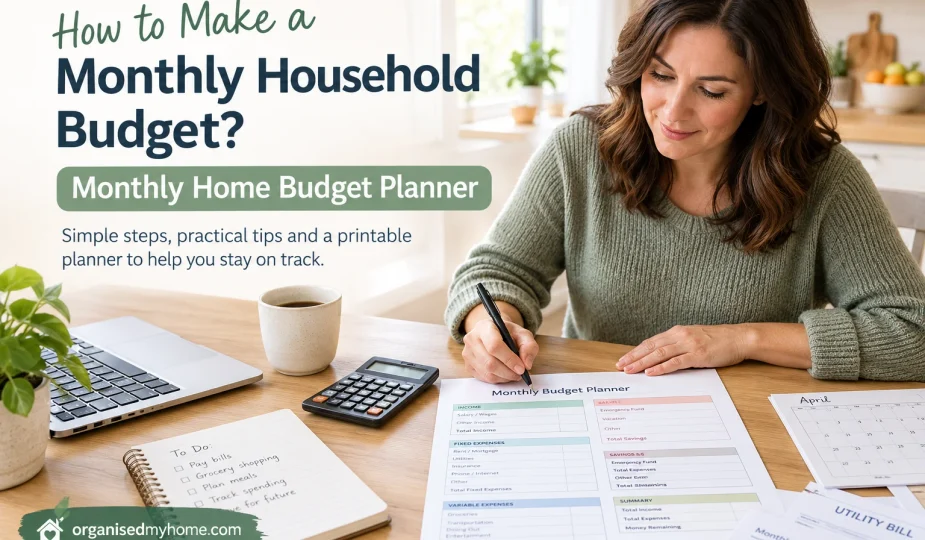
A Monthly Home Budget Planner can help you bring your household income, regular bills, everyday expenses, and savings goals into one organized place. Instead of trying to remember due dates or mentally calculate what’s left in your account, you can plan the month before it gets busy.
At Organised My Home, Prince Mali shares practical ideas and simple planning systems that help people manage everyday household responsibilities more easily. In this guide, you’ll learn how to make a monthly household budget step by step, track your spending, prepare for irregular expenses, and build a routine you can realistically maintain.
You don’t need a complicated spreadsheet or a perfect financial plan to get started. You need a clear, manageable system that works for your household.
Why Is It Difficult to Manage a Monthly Household Budget?
Household expenses rarely arrive at convenient times. Your electricity bill might be due early in the month, groceries need replenishing every week, and a school expense or car repair can appear when you least expect it.
When you don’t have a plan, it’s easy to lose track of how much money is already committed to upcoming bills.
Here are a few common reasons household budgeting becomes difficult.
- Expenses are scattered: Bills, receipts, banking apps, and handwritten notes all contain different pieces of information.
- Small purchases add up: Coffee, takeout, convenience purchases, and online orders can be easy to overlook.
- Irregular expenses catch you off guard: Annual renewals, holidays, car maintenance, and school supplies don’t necessarily fit into a typical monthly bill schedule.
- Budgeting feels too complicated: Tracking every transaction in a detailed spreadsheet can become another chore.
- Plans aren’t reviewed: Even a thoughtful budget can become outdated when income, prices, or family needs change.
It’s easy to assume you need more discipline when a budget doesn’t work. But often, the first improvement is making your system simpler and easier to see.
A monthly household budget should help you make decisions, not make you feel guilty about every purchase.
What Is a Monthly Home Budget Planner?
A Monthly Home Budget Planner is a worksheet or planning system that helps you organize your household income, expenses, bill payments, and financial priorities for one month.
Depending on how you use it, your planner may include:
- Monthly income from work or other sources.
- Fixed expenses, such as rent, insurance, and loan payments.
- Variable expenses, such as groceries, gas, and electricity.
- Savings contributions and money set aside for future expenses.
- Bill due dates and payment tracking.
- Planned spending compared with actual spending.
- Notes about upcoming costs or changes to your budget.
A planner doesn’t automatically reduce expenses or guarantee that you’ll save money. Its value is that it makes your financial picture easier to understand, helping you decide what to prioritize and where adjustments may be needed.
A printable PDF can be especially helpful if you prefer writing things down, keeping household paperwork together, or reviewing your plan somewhere visible.
How to Make a Monthly Household Budget Step by Step: 6 Steps
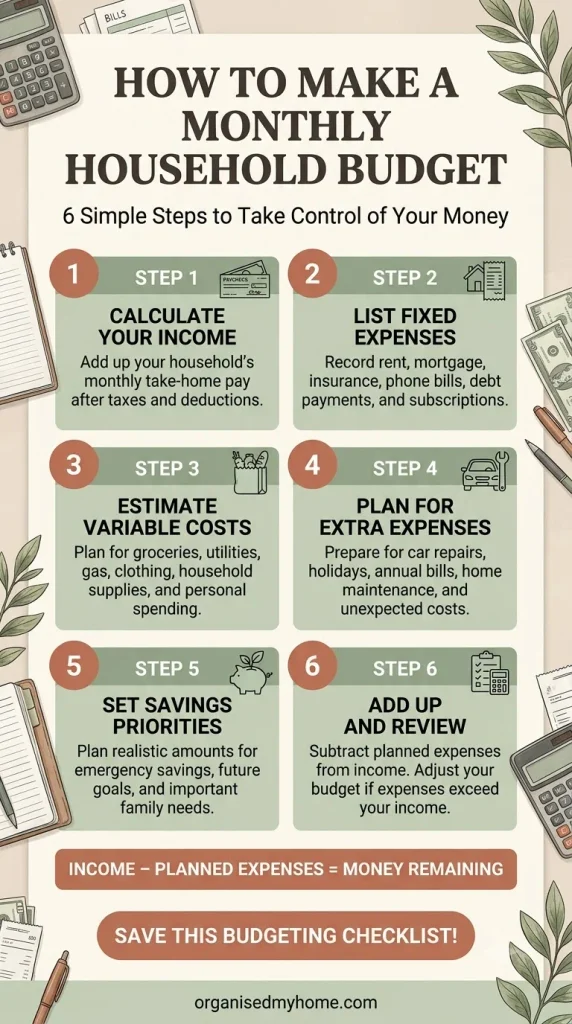
The easiest way to start budgeting is to work with the numbers you actually have, rather than the numbers you wish you had. The process below follows the basic approach recommended by Consumer.gov: list income, list expenses, compare the two, and revisit the plan regularly.
Step 1: Calculate Your Monthly Take-Home Income
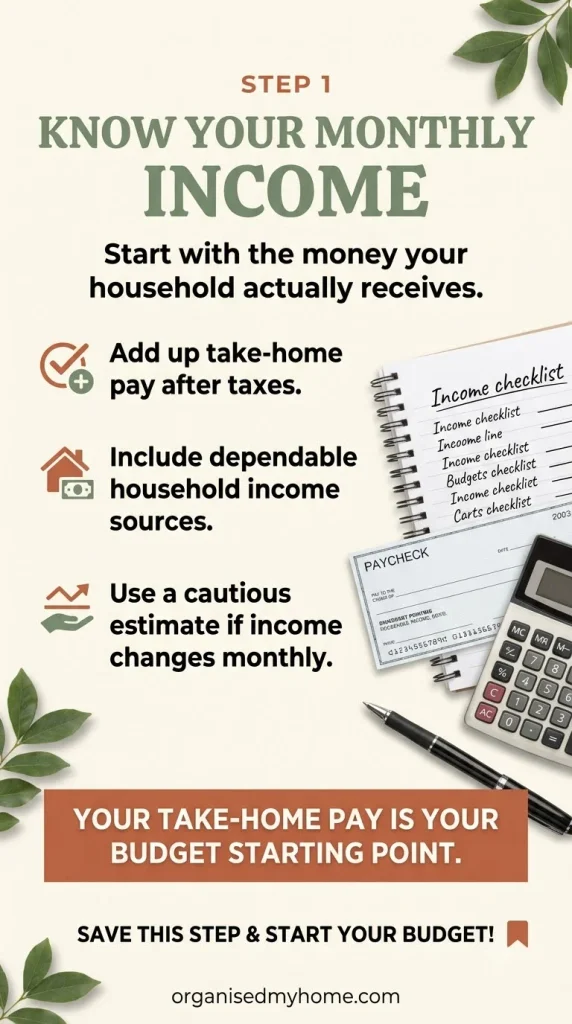
Start by identifying how much money your household has available to spend.
For most households, this means using income after taxes and payroll deductions, rather than the larger salary listed in an employment contract.
Include the income sources that apply to your household, such as:
- Take-home pay from your job.
- A partner’s or spouse’s take-home pay.
- Regular self-employment income after setting aside money for applicable taxes.
- Other dependable income you expect to receive.
If your income changes from month to month, review previous months and use a cautious estimate for planning. Avoid building your budget around an unusually good month.
Write down your total expected monthly income. This is the starting point for every other decision.
Step 2: List All Your Fixed Monthly Expenses
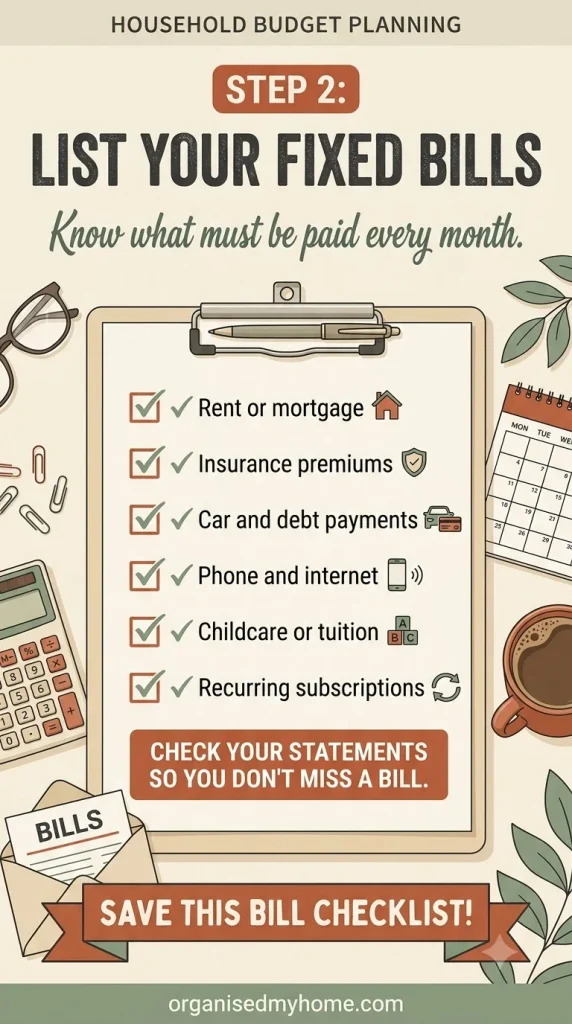
Fixed expenses are bills that usually stay the same or change very little each month.
Examples include:
- Rent or mortgage payments.
- Car payments.
- Insurance premiums.
- Internet and cell phone plans.
- Childcare or tuition payments.
- Minimum debt payments.
- Recurring subscriptions.
Check your bills, account statements, and payment records so you don’t forget a recurring expense.
Write down each payment and its expected amount. If a bill changes occasionally, use a reasonable estimate and update it when you know the actual amount.
Step 3: Estimate Your Variable Household Expenses
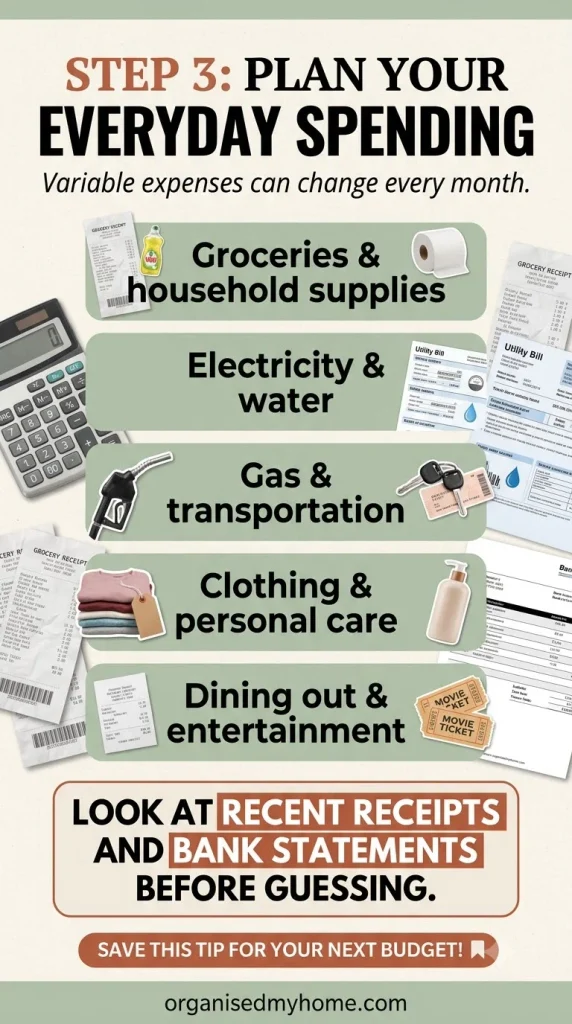
Variable expenses change depending on your needs, usage, and choices.
Common examples include groceries, household supplies, gasoline, electricity, water, dining out, clothing, and personal care.
These categories can be harder to budget because the amounts aren’t always predictable.
Instead of guessing, look at recent bank statements, receipts, and spending records. The Consumer Financial Protection Bureau recommends reviewing actual spending and looking back over several months to catch less frequent costs. Consumer Financial Protection Bureau
If you have never tracked your spending, start with a reasonable estimate. Record your actual expenses during the month and use that information to improve your next budget.
Step 4: Plan for Irregular and Unexpected Expenses
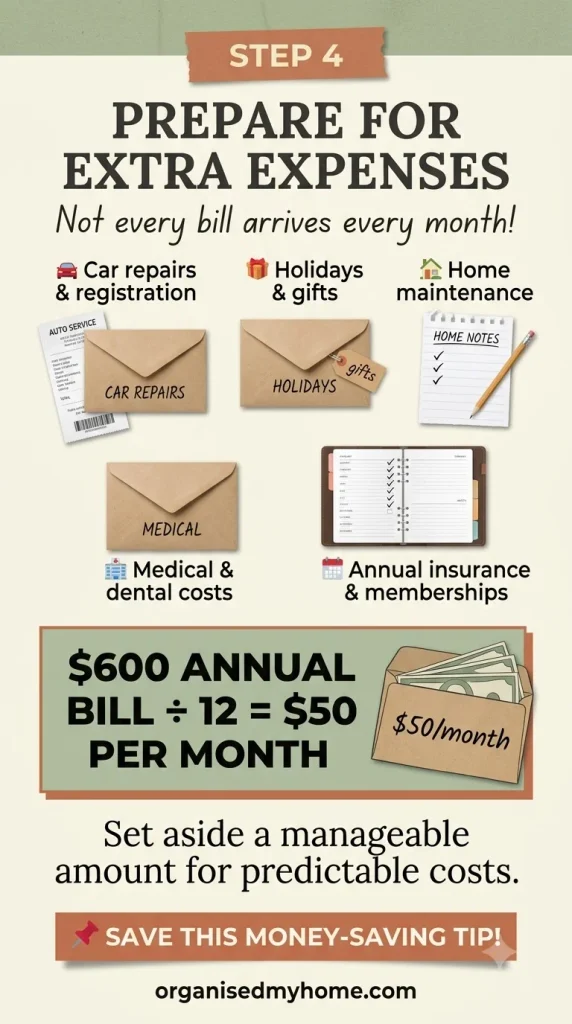
One of the most common budgeting mistakes is planning only for bills that arrive every month.
Think about expenses that appear occasionally, such as:
- Car registration and maintenance.
- Annual insurance premiums.
- Holiday gifts and celebrations.
- Back-to-school shopping.
- Home repairs.
- Medical and dental costs.
- Annual memberships or subscriptions.
These expenses may not occur every month, but they still belong in your overall household plan.
For a predictable annual expense, divide the estimated yearly cost by 12 to calculate a monthly amount to set aside.
For example, if you expect to spend $600 on a yearly insurance premium, setting aside $50 per month could help you prepare for that payment.
Unexpected costs are harder to predict, so consider building an emergency savings fund over time if your circumstances allow. Even a small, regular contribution can be a useful starting point.
Step 5: Set Your Savings and Financial Priorities
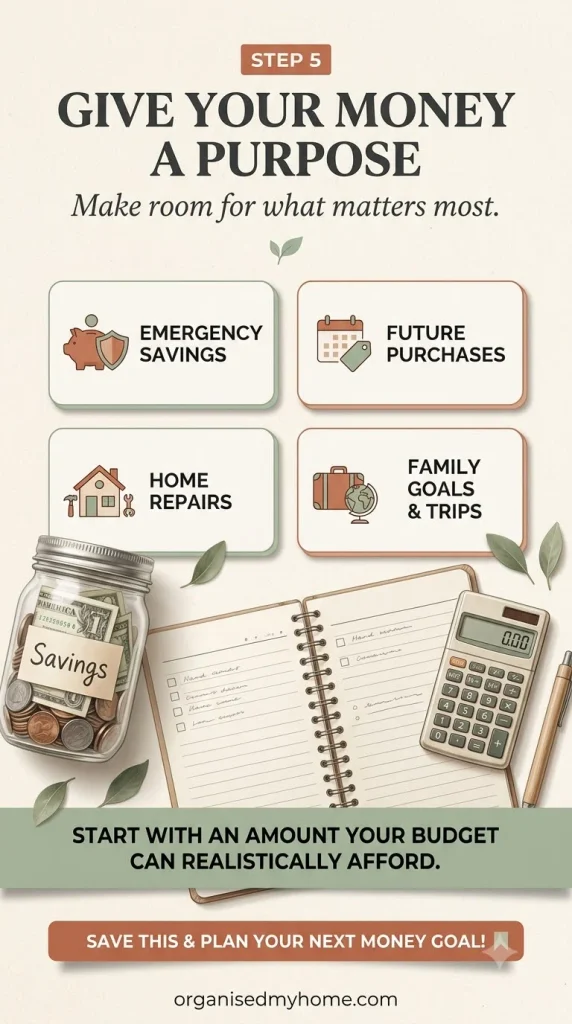
Savings shouldn’t depend entirely on whether you happen to have money left at the end of the month.
If your budget allows, decide what you want to set aside for priorities such as emergency savings, a future purchase, home repairs, or a family trip.
You can include these amounts as planned budget categories. This makes your priorities visible before discretionary spending begins.
If you’re dealing with overdue bills or essential expenses that exceed your income, focus first on understanding your immediate obligations and making a realistic plan. Don’t feel pressured to meet an arbitrary savings target that your current circumstances can’t support.
Step 6: Calculate Your Total Expenses and Remaining Money
Now add up your planned expenses and compare them with your take-home income.
Use this simple formula:
\[ \text{Income} – \text{Planned Expenses} = \text{Money Remaining} \]
Here is an illustrative monthly household budget. These figures are examples only; your own amounts will depend on your location, household size, and circumstances.
| Budget category | Example monthly amount |
|---|---|
| Take-home household income | $4,500 |
| Housing | $1,500 |
| Utilities and phone | $300 |
| Groceries and household supplies | $600 |
| Transportation | $400 |
| Insurance and healthcare | $250 |
| Debt payments | $300 |
| Childcare and family expenses | $250 |
| Personal spending and entertainment | $200 |
| Irregular-expense savings | $200 |
| Emergency savings | $150 |
| Other expenses | $150 |
| Total planned expenses | $4,300 |
| Money remaining | $200 |
In this example, the household has $200 left after its planned expenses.
That remaining amount could be assigned to another priority, held as a buffer for variable costs, or saved if the household’s needs are already covered.
If your expenses exceed your income, don’t ignore the difference. Review the numbers, check for missing or duplicated entries, and identify which costs can realistically change. Essential bills may leave little room for adjustment, so some situations require a longer-term plan rather than a quick spending cut.
Step 7: Put Your Budget Into a Monthly Planner
Once you’ve worked out your numbers, bring everything together in one place.
A Monthly Home Budget Planner Printable PDF can give you a consistent layout for recording income, planned expenses, actual spending, and upcoming financial responsibilities.
Use your planner to:
- Record the month and your expected income.
- Enter each budget category and planned amount.
- Note important bill due dates, if your layout includes them.
- Track what you actually spend.
- Compare planned and actual amounts.
- Write down adjustments for the following month.
Keep the planner somewhere convenient, such as a household binder or desk where you regularly handle bills.
The goal isn’t to fill in every box perfectly. It’s to make your plan easy to review and update.
Step 8: Review Your Spending Every Week
A budget is more useful when you check it during the month instead of waiting until the last day.
Choose a regular time, perhaps Sunday evening or another quiet moment, to review your spending.
Ask yourself:
- Have I paid the bills that were due?
- How much have I spent on groceries and other variable categories?
- Are any upcoming expenses likely to change my plan?
- Do I need to adjust the remaining money for the month?
A short review can help you spot a problem early. If groceries are costing more than expected, for example, you can reconsider the remaining week’s meal plan before the month is over.
Step 9: Adjust Your Budget at the End of the Month
Your first budget is a starting point, not a permanent rule.
At the end of the month, compare your planned amounts with your actual spending. Notice which categories were realistic and which ones need adjusting.
If your utility bill was higher than expected, update the estimate. If you forgot a school expense, add that category next time. If your budget allowed more money for dining out than you actually needed, decide whether to keep that amount or redirect some of it.
A realistic budget improves as you learn more about your household’s spending patterns.
Explore More: How Can I Stop Forgetting Important Home Maintenance Tasks? Home Maintenance Checklist
What This Can Look Like in Real Life
Imagine a family that manages money through a mix of banking apps, email reminders, paper bills, and memory.
One parent remembers the mortgage payment, but the annual car registration gets overlooked. Grocery spending isn’t reviewed until the checking account balance looks lower than expected. At the end of the month, the family knows money was spent but can’t easily explain where the extra costs came from.
Now imagine the same family using a simple monthly budget planner.
At the start of the month, they record income and bills, estimate groceries and transportation, and set aside what they can for upcoming expenses. Once a week, they check actual spending and update the amounts.
They may still face unexpected bills or months when money is tight. The difference is that they have a clearer view of what is happening and can make decisions using information instead of guesswork.
That’s the practical purpose of a budget: not to eliminate every financial surprise, but to make everyday decisions easier to manage.
Benefits of Using a Printable Monthly Home Budget Planner
You can manage a household budget with a notebook, spreadsheet, or budgeting app. The best option is the one you’ll actually use.
A printable budget planner can be a good fit if you prefer a paper-based system or want to keep your household planning documents together.
Here are some potential benefits.
1. Your financial information stays organized. Instead of searching through several notes, you can keep your monthly income and spending plan together.
2. Your spending becomes easier to review. Seeing planned amounts alongside actual expenses can help you recognize patterns and identify categories that need attention.
3. You have a repeatable monthly routine. Using the same layout each month means you don’t have to create a new budgeting system from scratch.
4. You can prepare for upcoming bills. A written plan can make it easier to remember due dates and anticipate larger expenses.
5. You can reduce mental clutter. Recording your plan on paper gives you a reference point instead of requiring you to remember every number.
6. You can adjust the system to your household. Some months may require more attention to school expenses, travel, repairs, or medical costs. Your notes can reflect those changing priorities.
A printable won’t automatically improve your finances, but it can provide a simple structure for reviewing them regularly.
Why Choose an Organised My Home Printable?
If you prefer a ready-made layout rather than creating your own budget sheets, the Monthly Home Budget Planner Printable PDF from Organised My Home is one option to consider.
Organised My Home focuses on practical printables designed to help make everyday household responsibilities easier to organize.
Budget-Friendly Planning
You don’t need to purchase expensive budgeting software to write down your monthly income and expenses. A printable PDF offers a paper-based alternative, and you can review the product details and price to decide whether it fits your needs and budget.
The important thing is choosing a system that feels manageable and that you’ll continue using.
A Ready-to-Use System
Starting with a blank sheet can feel surprisingly difficult when you have several expense categories to organize.
A ready-made planner gives you a starting point, so you can focus on entering your own information and building a consistent routine instead of designing the layout yourself.
Use it alongside your existing bills, bank statements, and other financial records. The planner is an organizational tool, not a replacement for those records.
US Letter and A4 Printing Options
Paper sizes can vary depending on where you live and print your documents.
- US Letter: 8.5 × 11 inches, a common paper size in the United States.
- A4: 210 × 297 millimeters, commonly used in many other countries.
Organised My Home’s printable product approach includes US Letter and A4 versions, making it easier to choose the format that suits your printer or print service. Check the specific product listing for the included files before purchasing.
You can print the pages you need and keep them in a folder or binder. If you prefer a digital workflow, you can also check whether your preferred PDF application supports filling in the document on your device.
How to Make Your Budgeting Routine Easier to Maintain
Even a well-organized planner won’t be much help if it becomes another unfinished task. Try these simple habits to keep your routine manageable.
- Choose one regular budgeting time. A weekly 10–15-minute review may feel easier to maintain than a long session at the end of the month.
- Keep your records accessible. Store the planner near your household bills or use a designated folder.
- Start with the main categories. Record income, housing, utilities, groceries, transportation, debt payments, and savings before adding more detail.
- Use realistic estimates. A workable budget is more helpful than one built around spending levels you can’t consistently maintain.
- Avoid judging yourself over one difficult month. Review what changed and adjust your next plan.
- Protect your financial information. Keep printed documents containing account details or other sensitive information in a secure place.
If you want to improve other areas of household management, you can also connect your budgeting routine with meal planning, household organization, and regular home maintenance. For example, planning meals before grocery shopping can help you make more informed food purchases, while scheduling home maintenance can help you anticipate routine costs.
Free Printables From Organised My Home
You don’t have to purchase a planner to begin organizing your household responsibilities.
Organised My Home also offers selected free printables, giving readers an opportunity to try simple organizational tools without paying for every resource.
Explore the available free printables on the website and choose one that fits a current need. You can begin with a small task, build a habit around it, and decide later whether a more detailed planning system would be useful.
If you’re ready for a more structured approach to household finances, you can also explore the Monthly Home Budget Planner Printable PDF and review its features to see whether it suits your budgeting routine.
Frequently Asked Questions About a Monthly Home Budget Planner
How do I make a monthly household budget for beginners?
Start by calculating your take-home income, listing your regular bills, estimating variable expenses, and accounting for savings and less frequent costs. Subtract your planned expenses from your income, then review your spending weekly and adjust your plan as needed.
What expenses should I include in a monthly household budget?
Include housing, utilities, groceries, transportation, insurance, healthcare, debt payments, childcare, personal spending, savings, and irregular expenses such as car repairs, holidays, and annual bills. Your categories should reflect your household’s actual needs.
What should I do if my expenses are higher than my income?
First, verify your numbers and identify essential bills, upcoming obligations, and expenses that may be adjusted. Look for realistic changes rather than assuming every expense can be reduced. If you’re struggling to cover basic needs or debt payments, consider contacting a reputable nonprofit financial counselor for help.
Is a printable budget planner better than a budgeting app?
Neither is automatically better. A printable can suit people who prefer writing things down and keeping paper records together. An app may be more convenient for automatic transaction tracking. Choose the method that fits your preferences and that you can maintain consistently.
How often should I update my monthly budget?
Plan your budget at the beginning of each month, review it weekly, and compare planned expenses with actual spending at the end of the month. Update it sooner when your income, bills, or household circumstances change.
Final Thoughts: Make Household Budgeting Simpler
Creating a monthly household budget doesn’t require complicated calculations or a perfect financial routine. It starts with understanding how much money comes in, knowing where it needs to go, and making a plan you can review as life changes.
Begin with your main expenses, account for less frequent costs, and check your progress regularly. If your first budget doesn’t work exactly as planned, use what you learn to make the next one more realistic.
At Organised My Home, Prince Mali shares practical resources to help make everyday home management more manageable. If having your budget on paper would help you stay organized, explore the Monthly Home Budget Planner Printable PDF and see whether it fits your needs. You can also explore the site’s selected free printables to find other simple ways to organize your home.
You don’t need to get everything right in one month. A small, repeatable system can be a helpful place to start.