Have you ever looked around your home, noticed dishes in the sink, laundry waiting to be folded, and clutter covering the kitchen counter, and felt completely stuck? You know the house needs attention. You might even have a free hour to clean. Yet, somehow, getting started feels harder than it should.
If you have ADHD, this situation may feel frustratingly familiar. You might start cleaning one room, notice something that belongs in another, walk away to put it back, and suddenly find yourself doing an entirely different task. Before you know it, an hour has passed, but the original mess is still there.
Why is cleaning so hard with ADHD? The answer isn’t necessarily laziness or a lack of motivation. ADHD can affect attention, organization, working memory, planning, and the ability to begin or finish everyday tasks. The Centers for Disease Control and Prevention (CDC) recognizes that adults with ADHD may struggle with daily responsibilities and staying organized. These challenges can make ordinary household chores feel surprisingly complicated. CDC’s overview of ADHD in adults explains more about how symptoms can affect everyday life.
I’m Prince Mali, the blogger behind Organised My Home. I share practical ideas and simple systems to help people manage everyday home responsibilities more easily. I believe a home routine should support your life, not become another source of pressure.
If cleaning feels overwhelming, a few small changes can make the process more manageable. You don’t need a perfectly organized home or an elaborate cleaning schedule. You need a system that makes the next step clear, reduces unnecessary decisions, and works with your actual day.
Let’s explore nine practical ways to make cleaning easier with ADHD and how an ADHD Cleaning Planner can help you put those ideas into practice.
Why Is Cleaning So Hard with ADHD?
Cleaning looks like one job, but it is actually a collection of smaller tasks. Cleaning the kitchen, for example, might involve collecting dishes, loading the dishwasher, clearing the counters, wiping surfaces, putting groceries away, and sweeping the floor.
Each step requires a decision about what to do next.
For someone with ADHD, difficulties with executive functioning can make planning, task initiation, sequencing, and staying focused more challenging. The organization-focused resources from CHADD (Children and Adults with ADHD) explain how these skills can affect everyday tasks.
Several common situations can make cleaning particularly difficult:
- The task feels too big. Thinking about cleaning the entire house can make it difficult to choose a starting point.
- You forget what you were doing. You begin one chore, notice another, and lose track of the original task.
- You get distracted easily. A phone notification, an interesting object, or a conversation can interrupt your progress.
- You struggle to estimate time. A job that seems like a quick five-minute task may take much longer than expected.
- You become overwhelmed by clutter. Too many visible objects can make it difficult to decide where to begin.
- You try to do everything at once. Starting several chores without finishing any can leave you feeling as though nothing has changed.
- You feel discouraged by past attempts. When previous cleaning routines haven’t lasted, starting another one can feel pointless.
Another problem is relying entirely on memory. You might remember to wash the towels but forget to clean the bathroom mirror. You may intend to vacuum the living room, only to realize later that you never got around to it.
The solution isn’t always to try harder. Sometimes, you need fewer decisions, smaller tasks, and a visible reminder of what comes next.
How an ADHD Cleaning Planner Can Help
An ADHD Cleaning Planner Printable PDF provides a place to organize cleaning tasks, break them into manageable steps, and see your progress without keeping every responsibility in your head.
Instead of asking yourself, “What should I clean today?” you can look at your planner and choose one specific task.
A useful planner can help you:
- Keep daily and weekly cleaning tasks in one visible place.
- Break larger chores into smaller actions.
- Identify the most important tasks for the day.
- Create a repeatable routine without expecting every day to look the same.
- Track completed tasks and see what still needs attention.
- Adjust your plan when your energy, schedule, or priorities change.
A printable won’t clean your home for you, and it won’t automatically remove ADHD-related challenges. What it can do is provide a simple visual structure, making it easier to understand what needs doing and where to begin.
The best system is one you’ll actually use, even on an ordinary, imperfect day.
9 Practical Ways to Make Cleaning Easier with ADHD
1. Start With One Small, Specific Task
When you think, “I need to clean the whole house,” your brain has to process a long list of responsibilities before you’ve even started.
Make the task smaller.
Instead of cleaning the kitchen, choose one action:
- Put dirty dishes in the dishwasher.
- Wipe the kitchen counter.
- Throw away expired food from one shelf.
- Sweep the floor around the dining table.
Choose something that feels achievable right now. If you finish it and want to continue, you can. If you stop there, you’ve still completed something useful.
Try this: Write down one cleaning task before you begin. Avoid adding five more tasks until you’ve decided what to do with the first one.
2. Use a Timer to Create a Clear Stopping Point
Cleaning can feel endless when you don’t know how long you’ll need to continue. A timer creates a defined work period and gives you permission to stop.
Try a 5-, 10-, or 15-minute cleaning session. Choose a length that feels manageable rather than forcing yourself to work for half an hour.
For example, set a timer for 10 minutes and focus only on collecting dishes and clearing the kitchen counter. When the timer ends, check your progress.
You can stop, take a break, or begin another short session.
CHADD’s home and office organization advice also suggests using short work periods and breaks as ways to approach organizing tasks.
Try this: Add a column to your cleaning planner for short tasks or quick cleaning sessions. This can help you choose a chore that fits the time you have available.
3. Break Every Chore Into Smaller Steps
A task like “clean the bathroom” leaves a lot of room for uncertainty. What should you do first? Which supplies do you need? When is the job finished?
Turn the broad task into a checklist:
- Gather the cleaning supplies.
- Put away toiletries and personal items.
- Clear the sink and countertop.
- Wipe the mirror.
- Clean the sink and faucet.
- Clean the toilet.
- Wipe frequently touched surfaces.
- Sweep or mop the floor.
You don’t have to complete every step in one session. You can split the list across two short sessions if that works better.
Be specific enough that you don’t need to think through the entire job again each time you start.
Try this: Whenever you write a task on your ADHD Cleaning Planner, ask yourself, “Would I know exactly what to do if I started this right now?” If the answer is no, divide it into smaller actions.
4. Keep Your Cleaning Supplies Easy to Find
Have you ever started cleaning, spent several minutes looking for a cloth, found a different item that needed attention, and forgotten the original job?
Keeping frequently used supplies together can reduce these interruptions.
Create a small cleaning caddy with the products and tools you regularly use. Store it somewhere convenient, such as a suitable utility cupboard. You could also keep appropriate supplies in different areas of the home if that makes sense for your space.
Keep safety in mind: follow product labels, store cleaners away from children and pets, and never mix cleaning chemicals.
It’s also helpful to return supplies to the same place after each session. That way, you’re less likely to spend time searching the next time you clean.
Try this: Choose one frequently cleaned area, such as the bathroom, and organize the supplies you need for that space first. You don’t have to reorganize every cupboard in the house.
5. Use a Visible Cleaning Checklist
A cleaning plan hidden in a phone app may not help if you forget to open it. A paper checklist placed somewhere you naturally look can provide a more noticeable reminder.
You might keep your planner on the refrigerator, inside a kitchen cupboard, or on a small clipboard near your cleaning supplies.
Organize the list into simple categories, such as:
- Daily essentials
- Weekly cleaning
- Laundry
- Room-by-room tasks
- Tasks to do when you have extra time
Keep the categories relevant to your household. If you live alone, your list may look different from one designed for a family with children and pets.
You can also use checkboxes to mark completed tasks. This gives you a visible record of what you’ve done rather than leaving you to rely on memory.
Try this: Start with no more than three to five priority tasks on your daily list. A short, realistic checklist is often easier to use than a page filled with chores.
6. Choose a Simple Cleaning Routine Instead of a Perfect Schedule
A detailed cleaning schedule might look impressive, but it can become difficult to follow when life gets busy.
Instead, attach small cleaning tasks to parts of your existing routine.
For example:
- After breakfast, load the dishwasher.
- Before bed, spend five minutes collecting items from the living room.
- After doing laundry, put away one load rather than leaving every basket for later.
- On a day that suits your schedule, clean the bathroom sink and mirror.
These are examples, not rules. Your routine should reflect your work hours, energy, family responsibilities, and personal preferences.
It also helps to have a minimum version for difficult days. Perhaps your minimum kitchen routine is to put away food, collect dirty dishes, and wipe up spills. Other tasks can wait.
Try this: Pick one daily task and connect it to something you already do. Repeat it for a while before adding another habit.
7. Reduce Distractions Without Expecting Perfect Focus
You don’t have to eliminate every distraction to make progress. The goal is to make it easier to return to the task when your attention wanders.
Try a few simple adjustments:
- Put your phone on Do Not Disturb for a short cleaning session.
- Play a familiar playlist, podcast, or audiobook if background sound helps you focus.
- Keep a small note nearby for unrelated tasks that pop into your head.
- Avoid opening cupboards or starting new projects while working on your current task.
- Use a basket for items that belong in other rooms, then put them away together when you finish the main task.
For instance, if you discover a book that belongs upstairs while cleaning the living room, put it in your basket rather than immediately walking away to deliver it.
The important part is choosing a method that helps you stay engaged. If music becomes distracting, turn it off. If a timer creates pressure, try a checklist instead.
Try this: Choose one distraction-reducing strategy for your next cleaning session. You don’t need to change everything at once.
8. Make Cleaning More Engaging and Ask for Support
Repetitive chores aren’t equally motivating for everyone. Adding something enjoyable or working alongside another person may make them easier to approach.
You could listen to a favorite playlist, use a pleasant cleaning tool, or give yourself a small reward after completing a task.
Some people also find body doubling helpful. This means working while another person is present, either in person or through a video call. You might clean the kitchen while a friend folds laundry nearby, or arrange a short virtual cleaning session with someone who is also tackling household chores.
Support doesn’t have to mean someone comes over to clean your home. Sometimes, knowing that another person is working alongside you provides enough structure to get started.
Try this: Pair one unpleasant chore with something you enjoy, or ask a trusted friend or family member to join you for a short cleaning session.
9. Review Your Progress and Adjust the Plan
A cleaning routine should be flexible enough to change when it isn’t working.
If you repeatedly skip a particular task, ask yourself why. Is it too large? Is the timing inconvenient? Are the supplies difficult to find? Would it be easier to divide the task across two days?
For example, if washing, drying, folding, and putting away laundry feels overwhelming, separate the process into smaller tasks. You might wash a load in the morning, fold it later, and put it away after dinner.
At the end of the week, review what worked and what didn’t. Move unfinished tasks to another day when appropriate, remove unnecessary chores, and change the schedule if needed.
Avoid treating every unchecked box as a failure. A checklist is information about your week, not a judgment of your effort.
Try this: Spend five minutes reviewing your cleaning planner once a week. Keep the parts that help and change the parts that create more pressure.
How to Use an ADHD Cleaning Planner Step by Step
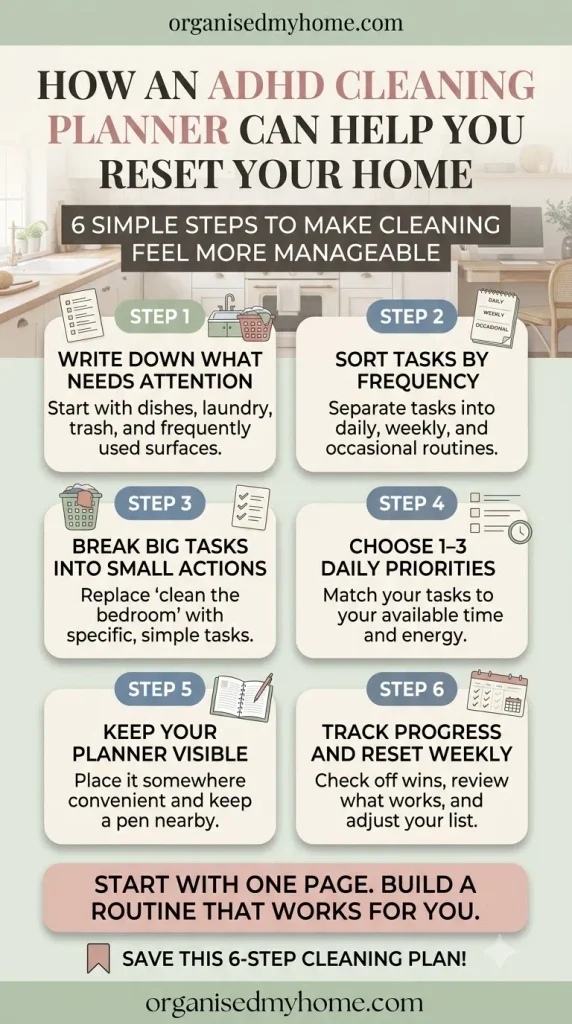
If you want to put these ideas into practice, here’s a simple way to start using an ADHD Cleaning Planner Printable PDF.
Step 1: Write Down What Actually Needs Attention
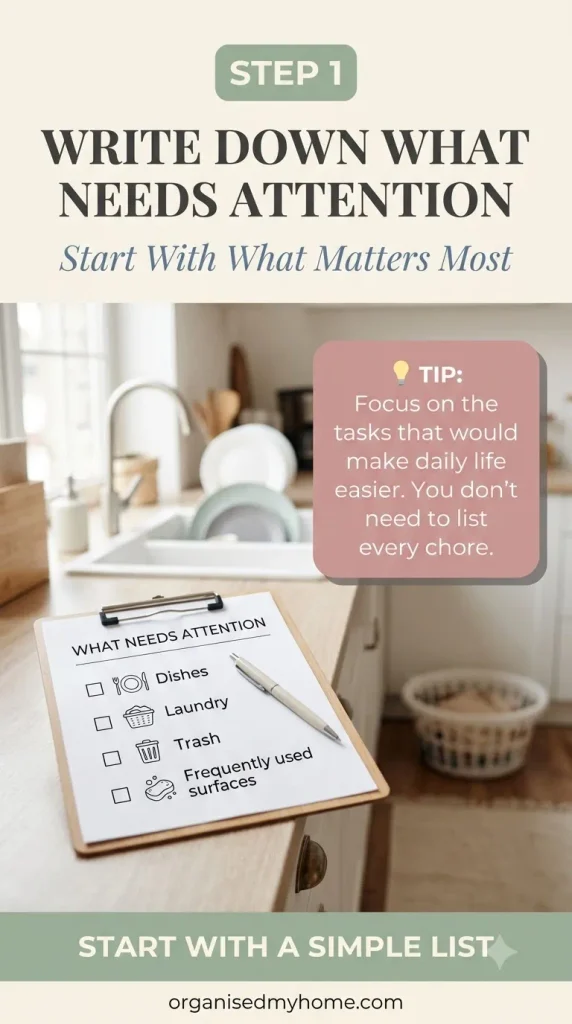
Walk through your home and note the tasks that would make the biggest difference. Don’t try to record every possible cleaning job.
Focus on essentials such as dishes, laundry, food preparation surfaces, trash, and frequently used bathrooms.
Step 2: Sort Tasks by Frequency
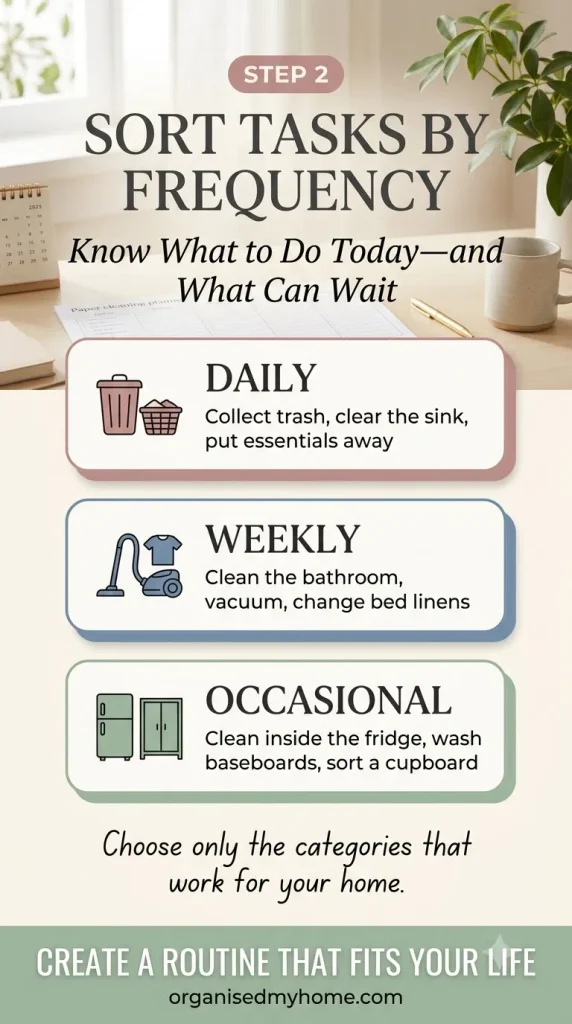
Divide your list into daily, weekly, and occasional tasks. Only include categories that are useful for your home.
This helps you distinguish between what needs regular attention and what can wait.
Step 3: Break Larger Tasks Into Smaller Actions
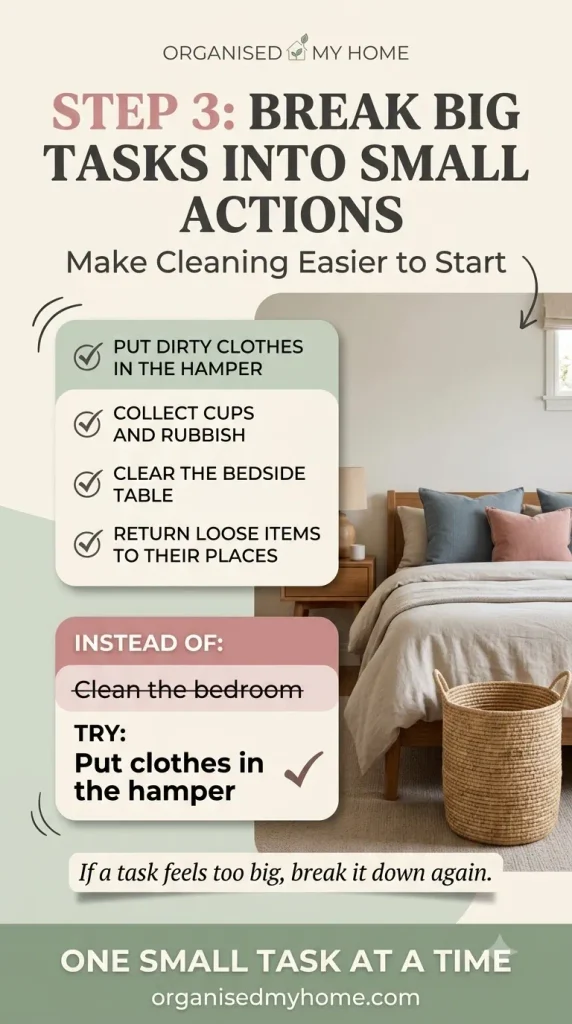
Replace vague instructions with specific steps. Instead of “organize bedroom,” write “put dirty clothes in the hamper” or “clear the nightstand.”
Specific instructions make it easier to begin without planning the entire job again.
Step 4: Choose a Realistic Daily Priority
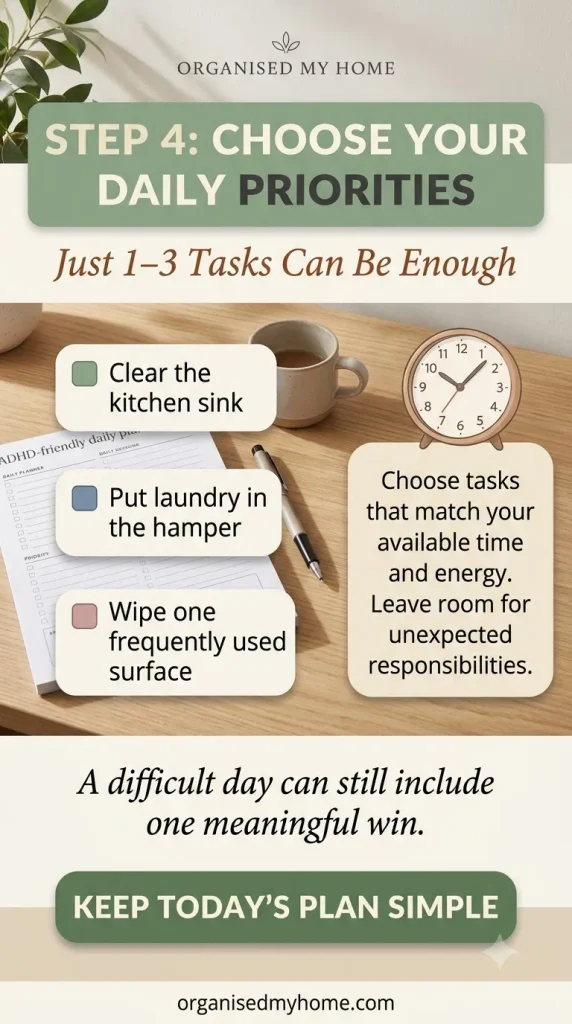
Pick one to three important tasks based on the time and energy you have. Leave room for unexpected responsibilities.
On a difficult day, one completed task can be enough to keep your system moving.
Step 5: Keep Your Planner Somewhere Visible
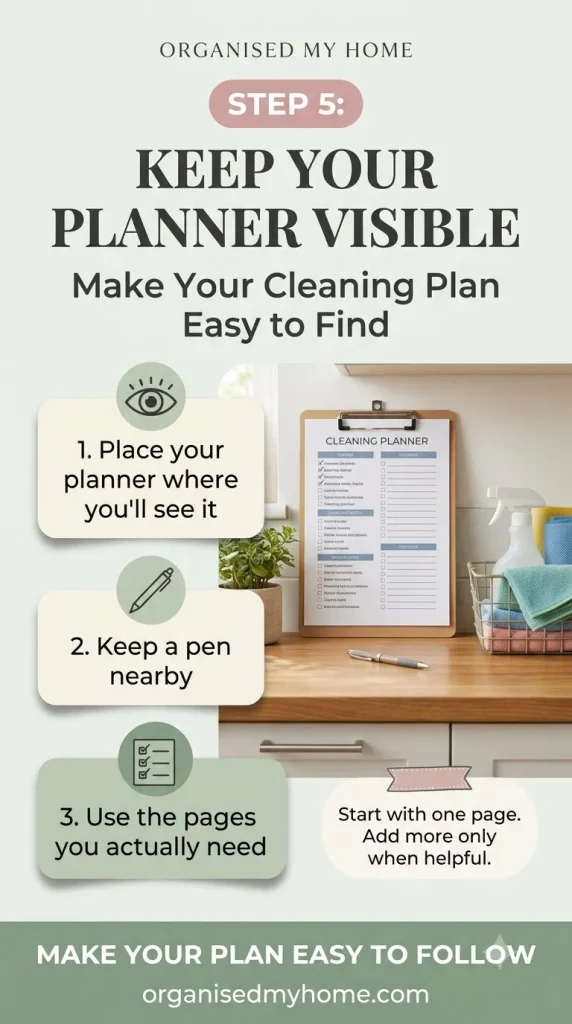
Print the pages you intend to use and place them where you’ll see them. Keep a pen nearby so you can mark progress without searching for supplies.
Step 6: Check Off Progress and Reset Weekly
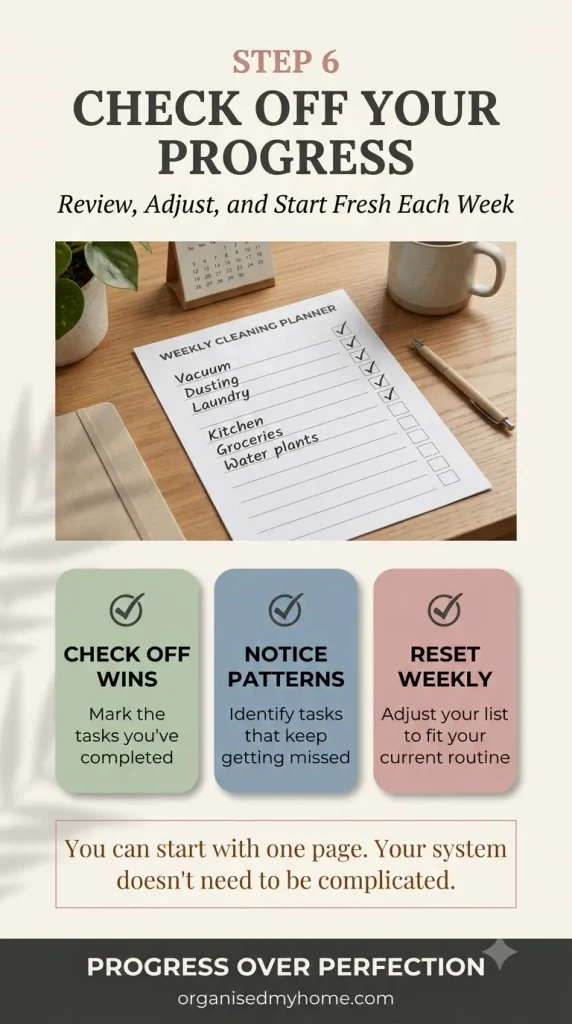
Mark completed tasks, notice recurring problems, and adjust your list. Reprint or reuse pages according to the planner’s format and your preference.
You can start with a single page and expand the system only when it becomes useful. There’s no need to create a complicated household management project just to make cleaning easier.
What This Can Look Like in Real Life
Imagine an adult who works full-time and has ADHD. By Friday evening, laundry is piled up, the kitchen counter is cluttered, and several small chores have been postponed.
Before using a simple system: They try to remember everything that needs doing. They begin sorting laundry, notice the overflowing trash, walk to the kitchen, see dirty dishes, and start washing them. Soon, several tasks are partly completed, and it’s difficult to tell what deserves attention first.
After introducing a cleaning planner: They look at a short list and choose three priorities: collect the trash, load the dishwasher, and start one load of laundry. They set a 10-minute timer for the kitchen and put unrelated items into a basket rather than switching tasks.
They don’t finish every chore that evening, and the house isn’t suddenly perfect. But the most important tasks have a clear starting point, and the remaining chores are written down for another day.
That’s the practical value of a system: it helps make the next action more obvious without requiring you to remember everything at once.
Benefits of Using Printable PDFs for ADHD Cleaning
A printable planner isn’t the right tool for everyone, but it can be a useful option if you prefer paper reminders and visual checklists.
Here are some potential benefits.
- Everything has a place. Keeping cleaning tasks on a dedicated page can reduce the need to search through messages, notes, and reminders.
- Tasks become more visible. You can see what needs attention without opening an app or remembering a long list.
- Progress is easier to recognize. Checking off completed tasks provides a simple record of what you’ve accomplished.
- Routines can become more repeatable. Reusing the same checklist may reduce the number of decisions you need to make.
- You can work in short sessions. Choose only the tasks that fit the time you have available.
- The system is flexible. Add notes, skip unnecessary tasks, or rearrange your routine to suit your household.
- You can print pages when needed. A paper copy can stay in a visible location, and you can print another copy when you need a fresh one.
A printable won’t remove every distraction or make every chore enjoyable. Its purpose is to give your cleaning routine a clear, practical structure that you can adapt over time.
Why Choose an Organised My Home ADHD Cleaning Planner Printable PDF?
If you prefer a ready-made starting point instead of creating every checklist from scratch, the ADHD Cleaning Planner Printable PDF from Organised My Home is one option to consider.
The idea is simple: bring your cleaning responsibilities into one manageable system so you can spend less time deciding what to do and more time working through individual tasks.
Organised My Home printables are designed to be practical, approachable, and easy to adapt to everyday household needs. Rather than expecting you to maintain a perfect schedule, a planner can give you a framework to personalize.
Budget-Friendly and Practical
A printable PDF gives you a digital file that you can print as needed, rather than requiring a new physical planner for every change in your routine.
The value depends on how often you use it and whether the layout suits your needs. Choose a system that feels useful for your household and fits your budget.
A Ready-to-Use System
Starting with a blank page can sometimes create another task: deciding what to write, how to organize it, and which categories to include.
A ready-made planner gives you a starting structure. You can use the relevant pages, adapt the routine, and leave out anything that doesn’t fit your life.
US Letter and A4 Paper Sizes
Organised My Home printable products are designed with US Letter and A4 paper options, making them suitable for many U.S. households as well as readers in other countries.
Check the product listing for the specific files included. You can print at home if you have a printer or use a local print service.
Print only the pages you need, and choose a format that is comfortable to read and easy to keep visible.
Free Printables From Organised My Home
You don’t have to purchase a planner to begin making your home routines more manageable.
Organised My Home also offers selected free printables so readers can try simple organization tools without committing to a paid product. Explore the available free printables and choose one that addresses a household task you’re currently finding difficult.
Starting with a free resource can help you discover whether paper checklists work for you before building a larger system.
Give Your Cleaning Routine a Simpler Starting Point
If you’d like a little more structure, explore the ADHD Cleaning Planner Printable PDF from Organised My Home. Choose the pages that fit your needs, keep them somewhere visible, and begin with a manageable task rather than trying to change your entire routine overnight.
You can also explore the site’s selected free printables if you’d prefer to start with a no-cost option.
The goal isn’t to make every room spotless every day. It’s to make everyday responsibilities easier to understand, begin, and manage.
Final Thoughts
Cleaning can be difficult with ADHD for many reasons, including challenges with attention, planning, organization, and getting started. When a cleaning routine feels overwhelming, adding more rules or expecting more motivation may not solve the problem.
Try making each task smaller, using short work sessions, keeping supplies accessible, and putting reminders somewhere visible. Experiment with a checklist or printable planner, and give yourself permission to change the system when your needs change.
An organized home doesn’t require perfection. Some days, you might complete your entire list. On other days, you might manage only one or two tasks. Both can be part of a realistic routine.
At Organised My Home, Prince Mali shares practical ideas and printable resources to help make home responsibilities more manageable. If a ready-made visual system sounds helpful, take a look at the ADHD Cleaning Planner Printable PDF, or start by exploring the available free printables.
One small task at a time is a perfectly reasonable way to begin.